I spent three hours last Tuesday trying to migrate candidate data between two different applicant tracking systems that should have taken ten minutes. It was a complete nightmare. When you are scaling a one-person operation into a small agency, hiring is already stressful enough without fighting your own software.
That is exactly why I decided to put these two heavyweights head-to-head. I needed to know which platform actually delivers on its promises without requiring a computer science degree to operate.
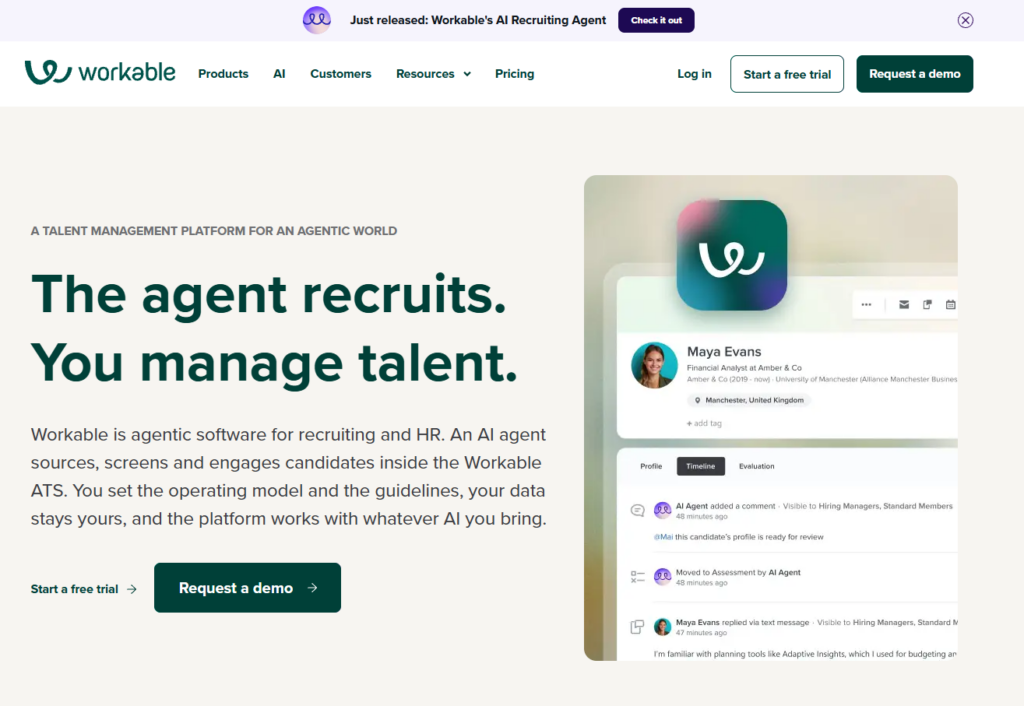
I have helped a few founder friends set up their hiring pipelines recently, and the exact same question keeps coming up. They always ask me about Workable vs Greenhouse for tech startups. Both platforms claim to be the absolute perfect solution for finding top talent. But honestly, marketing pages lie, and I wanted to see how they actually perform when you are in the trenches reviewing fifty resumes a day.
I set up dummy accounts, pushed fake candidates through the pipelines, and tested the automated email triggers. I even tried breaking their integration setups just to see how the error handling works. What I found genuinely surprised me. One of these tools is an absolute powerhouse for structured hiring, while the other feels like it was built specifically for people who hate reading manuals.
If you are trying to decide between Workable vs Greenhouse for tech startups, you cannot just look at the feature list. You have to look at the daily friction, so let’s break down exactly what happened during my testing.
Table of Contents
The Ultimate Head-to-Head: What Actually Matters for Scaling Teams
When evaluating Workable vs Greenhouse for tech startups, you have to ignore the flashy enterprise features. You likely do not need a custom API endpoint for your HR dashboard right now. What you actually need is speed and precision. Tech hiring is brutal right now, and you are competing with massive companies for the exact same talent pool.
According to a recent study by Gartner, the average time to hire has stretched to nearly 40 days. That is an eternity in the startup world. You need a tool that cuts that time down, not one that adds administrative bloat to your day.
I focused my testing on three core areas: pipeline visibility, candidate communication, and pricing transparency. Pipeline visibility is strictly necessary because you need to see exactly where bottlenecks are happening. If a senior developer candidate is stuck in the technical interview phase for two weeks, the software should flag that immediately. Candidate communication is equally important for maintaining your employer brand.
If your automated emails look like they were written by a robot from 2005, top-tier developers will just ignore you and move on. I actually wrote a whole piece on Omnisend vs Klaviyo recently, and the exact same communication rules apply here. Good software respects the user’s time and makes outreach feel human.
Then there is the pricing aspect, which is always a headache. This is where things get incredibly frustrating for bootstrapped founders. Neither of these platforms makes it perfectly easy to figure out exactly what you will pay as you scale from 10 to 50 employees. I had to dig through Reddit forums and talk to aggressive sales reps just to get baseline numbers.
It is a massive friction point that I despise. A report from Statista shows that HR software spending is skyrocketing globally. But that does not mean you should overpay for basic features you will never actually use.
You also have to consider how these tools fit into your broader tech stack. If you are already using advanced automation for your marketing or sales, you will want your recruiting tool to play nice with your existing webhooks and Slack channels. I highly recommend checking out my guide on Brevo vs ConvertKit if you want to see how proper integrations should work.
In the end, choosing between Workable vs Greenhouse for tech startups comes down to your specific hiring philosophy. Do you want a rigid, highly structured process, or do you want something fast and flexible? Let’s look at the specific tools.
Comparison Table 📊
| Tool | Best For | Starting Price | Free Plan | Rating |
|---|---|---|---|---|
| Workable | Fast Setup & Sourcing | $149/month | No (15-day trial) | 4.5/5 |
| Greenhouse | Structured Hiring | Custom (~$800/mo) | No | 4.7/5 |
Frequently Asked Questions
Which is better when comparing Workable vs Greenhouse for tech startups?
It honestly depends entirely on your current growth stage and expected hiring volume for the year. If you are a seed-stage company needing to hire five people quickly, Workable is the clear winner due to its incredibly fast setup. However, if you just raised a Series A and need to scale a massive engineering team, Greenhouse provides the necessary structure to avoid chaos.
Does Greenhouse offer a transparent pricing model for small businesses?
No, they absolutely do not, and it drives me crazy. This is one of my biggest personal frustrations with the platform as a reviewer. You have to go through their entire sales pipeline just to get a custom quote based on your current headcount. From my experience and industry whispers, expect to pay significantly more than you would for entry-level ATS platforms.
Can I integrate these recruiting tools with my existing HR software?
Yes, both platforms offer extensive integration marketplaces to connect with your existing tools. Greenhouse generally has the edge here with a much larger ecosystem of third-party connections and API endpoints. Workable still connects to major platforms like BambooHR and Gusto, but Greenhouse feels more like a true enterprise hub.
Is the AI sourcing feature in Workable actually worth the upgrade?
In my testing, I found the AI features to be pretty underwhelming overall. It functions mostly as a basic keyword scraper across public profiles rather than a true intelligent sourcer. If you are hiring for highly specialized tech roles, you are still going to need to do manual outreach on platforms like GitHub or specialized developer forums.
How long does it take to fully implement Greenhouse?
You should realistically budget several weeks for a proper Greenhouse implementation if you want to do it right. Because the system relies heavily on structured interview kits and custom rubrics, you have to build those out before you invite a single candidate. It is definitely not a tool you can just turn on and start using the same afternoon.
My Final Verdict on workable vs greenhouse for tech startups 🥇
After spending way too much time deep in the settings of both platforms, the winner of the Workable vs Greenhouse for tech startups debate is actually pretty clear-cut. It all comes down to your immediate runway and hiring goals.
If you are a small team that needs to get job postings live today without a massive upfront investment, go with Workable. The $149/month starting price is transparent, and the UI is incredibly forgiving for first-time recruiters. It just works right out of the box without a headache.
However, if you are gearing up for serious hyper-growth and have the budget to match, Greenhouse is the ultimate choice. Yes, the hidden pricing is annoying, and the setup will take weeks. But the structured hiring framework it forces your team to adopt will save you from making incredibly expensive bad hires down the road. It is the one I would actually pay for if I were scaling a 50-person engineering department.

Written by Giorgi Sakandelidze
I independently test and review software tools to help fellow solopreneurs find the exact right solution. My hands-on testing process covers real-world freelance use cases, pricing accuracy, and genuine limitations — not recycled vendor marketing copy.
Learn about my review methodology →
🕒 Last updated: 2026-08-14 — We update our reviews whenever tools change pricing or features.