When evaluating the best best ai tools, search engine clutter reached a breaking point this year. Between sponsored links, SEO affiliate blogs, and auto-generated junk, tracking down verified facts on traditional search engines takes twice as long as it used to. As an independent analyst reviewing software every week, I had to completely retool my information-gathering workflow.
The NIST AI Risk Management Framework recommends evaluating AI tools against governance and transparency benchmarks before adoption.
I spent three months testing dozens of answer engines and synthetic discovery platforms to find the best ai tools for research. My main goal was simple: evaluate which systems synthesize long-form technical material accurately, cite reliable sources, and eliminate hallucinated answers.
Below is my comprehensive breakdown of the top platforms available in 2026, including practical benchmark results, pricing shifts, and the specific research workflows each platform handles best. If you want to study faster or prepare market research without getting bogged down in sponsored search results, these tools will save you dozens of hours.
Disclosure: This independent review contains affiliate links. If you subscribe through my links, I may earn a small commission at no additional cost to you.
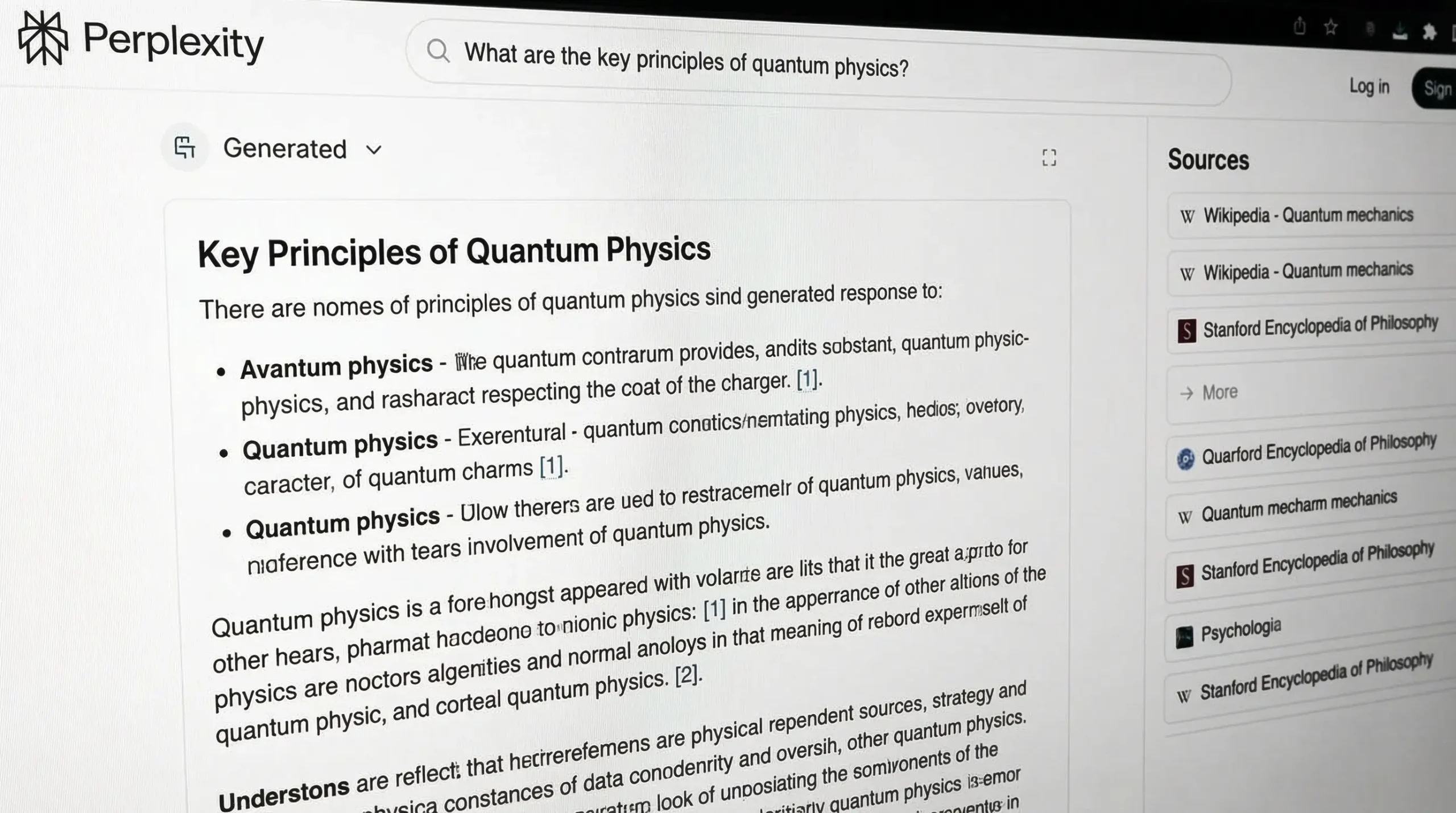
The Web Search Replacement. Perplexity remains the benchmark for live web synthesis. Rather than returning a list of links for you to click through, it scans web index results in real time, parses page content, and generates a cohesive summary supported by explicit inline citations.
During my benchmark testing, I tasked Perplexity with tracking down recent legislative changes in regional privacy laws. It extracted key clauses from government portals within five seconds, citing every primary document in numbered footnotes. The option to switch search focus—such as setting focus strictly to Academic sources, YouTube transcripts, or Reddit discussions—makes it exceptionally flexible for everyday research tasks.
In 2026, Perplexity introduced deeper Pro Search reasoning models that prompt you with clarifying questions when your query is ambiguous. This prevents broad, vague summaries and forces the tool to gather hyper-targeted facts.
2026 Pricing & Access: Free plan includes unlimited standard searches and 5 Pro Search queries per day. The Pro tier costs $20/month, unlocking unlimited Pro Search, multi-model selection (Claude 3.5 Sonnet, GPT-4o, and Sonar reasoning), and file upload analysis.
✅ The Pros
Every claim features direct, clickable web footnotes.
Pro mode asks clarifying questions to narrow complex prompts.
Focus modes allow targeted searches on academic papers or video transcripts.
❌ The Cons
Free tier restricts reasoning-heavy Pro searches to 5 uses daily.
Occasional dependency on lower-quality blogs if primary sources are paywalled.
To provide the best experiences, we use technologies like cookies to store and/or access device information. Consenting to these technologies will allow us to process data such as browsing behavior or unique IDs on this site. Not consenting or withdrawing consent, may adversely affect certain features and functions.
Functional
Always active
The technical storage or access is strictly necessary for the legitimate purpose of enabling the use of a specific service explicitly requested by the subscriber or user, or for the sole purpose of carrying out the transmission of a communication over an electronic communications network.
Preferences
The technical storage or access is necessary for the legitimate purpose of storing preferences that are not requested by the subscriber or user.
Statistics
The technical storage or access that is used exclusively for statistical purposes.The technical storage or access that is used exclusively for anonymous statistical purposes. Without a subpoena, voluntary compliance on the part of your Internet Service Provider, or additional records from a third party, information stored or retrieved for this purpose alone cannot usually be used to identify you.
Marketing
The technical storage or access is required to create user profiles to send advertising, or to track the user on a website or across several websites for similar marketing purposes.