A growing enterprise pipeline quickly exposes architectural limits. Configuring multi-touch attribution or syncing external ERP records often requires a certified technical specialist simply to avoid breaching API Governor Limits.
That operational bottleneck defines the core tension in the zoho vs salesforce debate. Teams must balance developer-grade architectural extensibility against platform maintainability and ballooning subscription overhead.
This 2026 architectural breakdown examines real licensing tiers, API rate ceilings, Deluge versus Apex scripting constraints, and the total cost of ownership behind each platform.
Table of Contents
- Architectural Foundations: Proprietary Cloud vs. Hyperforce
- 1. Zoho CRM: Value Heavyweight & Mid-Market Engine
- 2. Salesforce Sales Cloud: The Enterprise Benchmark
- 3. HubSpot Sales Hub: The Usability Alternative
- 4. Creatio: Process-Driven No-Code CRM
- 5. Zoho One: The Unified Operating System
- Head-to-Head: salesforce vs zoho crm Feature Showdowns
- Zoho vs Salesforce Comparison Table
- Buyer’s Guide: Evaluating Total Cost of Ownership
- Frequently Asked Questions
- Final Editorial Verdict
Architectural Foundations: Proprietary Cloud vs. Hyperforce
Analyzing a zoho vs salesforce comparison requires looking beneath user interfaces. Both systems represent fundamentally distinct approaches to enterprise data infrastructure and multi-tenancy.
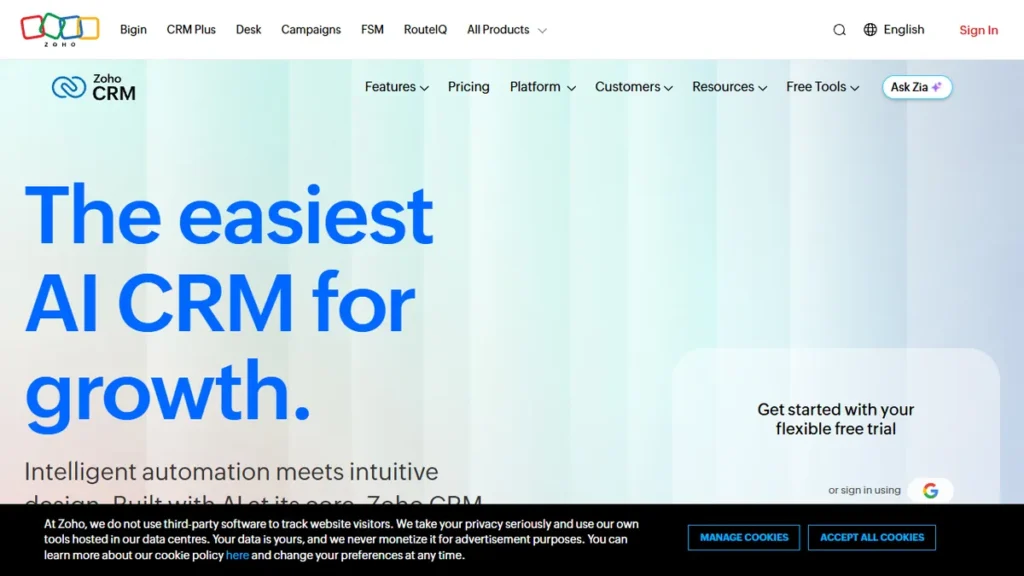
Zoho builds and runs its hardware stack inside proprietary data centers located across the globe. This full-stack independence means Zoho does not pay public cloud compute margins, passing lower per-seat costs directly to the end customer.
Salesforce operates on Hyperforce, deploying multi-tenant clusters directly on top of major public cloud providers like AWS. This infrastructure grants Fortune 500 enterprises hyper-scalable compliance and global data residency, but it comes with rigorous concurrency Governor Limits and enterprise-grade licensing rates.
Head-to-Head: salesforce vs zoho crm Feature Showdowns
Selecting between these systems requires analyzing specific technical execution limits. We compared both across four mission-critical operational benchmarks.
salesforce vs zoho crm: Lead Management & Pipeline Automation
In any salesforce vs zoho crm assessment, basic record tracking works well in both ecosystems. The architectural divergence occurs when managing complex automation.
Zoho uses visual Blueprints to establish linear stage gates. A representative cannot advance an account past discovery without completing required fields such as deal value and primary decision-maker. This keeps pipelines organized without custom code.
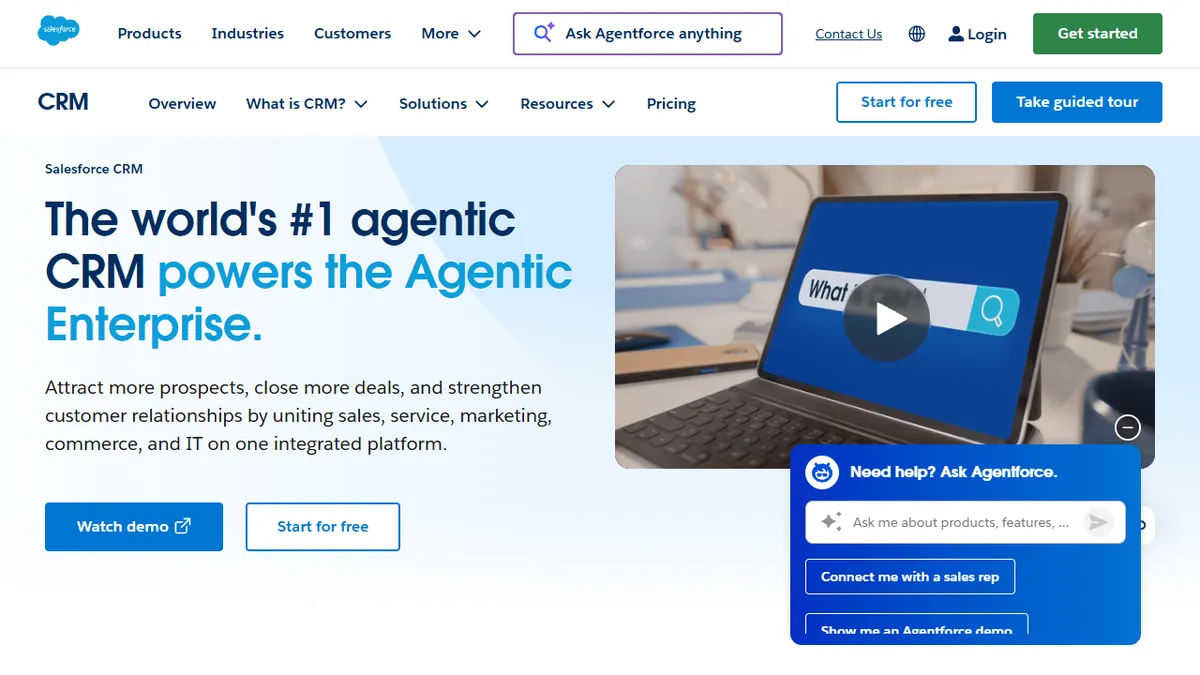
Salesforce utilizes Salesforce Flow, which operates as a visual software development environment. Flow can perform asynchronous batch updates, trigger headless background HTTP calls to microservices, and loop through complex record collections. For mid-market companies with straightforward sales cycles, Flow represents unneeded administrative friction. For enterprise RevOps managing hundreds of routing rules, it is indispensable.
zoho crm vs salesforce: Reporting, Analytics & Dashboard Speed
A direct comparison of zoho crm vs salesforce reporting highlights substantial differences in native query power.
Salesforce Sales Cloud sets the industry standard for enterprise analytics. Constructing matrix reports, historical trend analyses, and multi-object conversion funnels takes minimal administrative effort once custom objects are established. The database engine executes complex calculations across millions of customer records without performance drops.
Zoho CRM handles operational pipeline reporting reliably. However, when users require advanced cohort conversion calculations or multi-variable regression tracking, its native reporting module feels restrictive. Users must export data to Zoho Analytics to access enterprise-grade BI, which adds an extra step to configuration workflows.
salesforce crm vs zoho crm: AI Capabilities, Ecosystems & Hidden Costs
Evaluating salesforce crm vs zoho crm on artificial intelligence reveals contrasting packaging strategies.
Zoho includes Zia in its standard Enterprise tier ($40/user/month). Zia handles deal prediction scoring, suggests optimal communication windows, and flags pipeline anomalies without requiring dedicated data pipelines or consumption tokens.
Salesforce positions Agentforce as an autonomous agent framework connected to Data Cloud. The technical scope is vast: autonomous agents can review inbound RFPs, cross-reference internal knowledge bases, and update records across platforms. However, taking advantage of Agentforce requires either the top-tier Unlimited Edition ($350+/seat/month) or substantial usage-based credit add-ons.
zoho vs salesforce: API Limits & Developer Experience
For engineering teams integrating internal apps, API limitations represent a constant operational constraint.
Salesforce calculates API calls on a rolling 24-hour limit aggregated across user licenses. On Enterprise editions, organizations typically receive 100,000+ daily calls, but individual database transactions face strict Governor Limits (such as the 100 SOQL query limit per synchronous transaction). Code must be optimized using proper batching practices.
Zoho CRM enforces a daily API credit ceiling based on organization size. Standard plans start with 5,000 daily credits, scaling upward with Enterprise editions. Zoho’s Deluge language lacks the automated CI/CD tooling found in Salesforce DX, making multi-developer source-controlled release cycles harder to manage.
Zoho vs Salesforce Comparison Table
The comparative matrix below outlines key operational differences for 2026 implementations:
| Platform | Best For | Free Tier | Starting Pricing (2026) | Editorial Rating |
|---|---|---|---|---|
| Zoho CRM | Bootstrapped Teams & SMBs | Yes (Up to 3 users) | $14 / user / mo | 4.7 / 5.0 |
| Salesforce Sales Cloud | Complex Enterprise RevOps | No | $25 / user / mo (Starter) | 4.5 / 5.0 |
| HubSpot Sales Hub | Modern Inbound Sales Teams | Yes (Basic tools) | $15 / user / mo (Starter) | 4.6 / 5.0 |
| Creatio | Process-Heavy Operations | No | $40 / user / mo (Composable) | 4.4 / 5.0 |
| Zoho One | Unified Operating Stack | No (30-day trial) | $37 / employee / mo | 4.8 / 5.0 |
Buyer’s Guide: Evaluating Total Cost of Ownership
Choosing between salesforce vs zoho based purely on base subscription rates leads to inaccurate IT budgets. A comprehensive Total Cost of Ownership (TCO) evaluation requires accounting for three core factors:
1. Administrative Overhead and Consulting Multipliers
Salesforce implementations regularly require external implementation partners. Industry standards indicate that initial consulting and configuration fees often range from 1.5x to 2x the first-year software license expenditure.
Furthermore, maintaining complex validation rules, flows, and sharing configurations on Salesforce typically necessitates a full-time certified administrator. Conversely, a generalist RevOps lead or sales manager can oversee a 100-seat Zoho CRM environment using its visual Blueprint and Canvas builders.
2. API Gateways and Data Storage Penalties
Evaluate your integration architecture. If you plan to sync tens of thousands of telemetry rows from production databases into your CRM, confirm your storage and API ceilings upfront.
Salesforce limits storage allocations on baseline licenses, charging upwards of $250/GB/month for extra data blocks. Zoho provides lower base limits on standard tiers, but scaling daily API calls via add-on packs costs a fraction of enterprise cloud rates.
3. Renewal Escalations
Consider contractual term renewals. Multi-year Salesforce agreements commonly include standard 5% to 9% automatic annual price increases written into sales agreements.
Zoho has historically maintained fixed per-seat renewal rates without compounding annual price hikes. For bootstrapped startups and mid-market organizations, this pricing stability prevents unexpected budget shortfalls.
Frequently Asked Questions
Which is better for small-to-midsize businesses: zoho vs salesforce?
For companies with fewer than 250 employees without dedicated in-house Salesforce administrators, Zoho CRM is typically the superior operational choice. It delivers 80% to 90% of core CRM capabilities at a fraction of the cost, without requiring thousands of dollars in certified consulting services.
In a salesforce vs zoho crm comparison, which handles custom development better?
Salesforce is significantly better for custom software development. Its developer framework (Apex, Lightning Web Components, and Salesforce DX) supports modern engineering practices including automated CI/CD testing, Git version control, and multi-tier sandbox deployments. Zoho’s Deluge scripting environment is proprietary and lacks comparable engineering tooling.
What is the true cost difference between zoho crm vs salesforce?
The difference in total cost is significant. A 20-seat team using Zoho Enterprise spends roughly $9,600 annually with Zia AI included. That same 20-seat team on Salesforce Enterprise spends $42,000 annually for baseline licenses alone, excluding implementation fees, storage add-ons, or Agentforce AI packages.
Can I migrate from zoho to salesforce later as my company grows?
Yes. Data migrations between both platforms are common. While migrating raw relational data (Accounts, Contacts, and Deals) via CSV or REST APIs is straightforward, migrating proprietary Deluge automations or Salesforce Flow structures requires completely rewriting workflow logic in the target system.
Final Verdict on Zoho vs Salesforce
The choice between these two platforms is determined by operational scale and administrative headcount.
For lean operations, mid-market organizations, and companies already using adjacent tools like Zoho Books, Zoho CRM is our recommendation. It provides exceptional pipeline controls and native AI without predatory renewal structures or mandatory consultant retainers.
For enterprise revenue organizations managing complex multi-subsidiary territories, strict data compliance mandates, and dedicated RevOps engineering teams, Salesforce Sales Cloud remains the enterprise standard. Ensure your operating budget accounts for certified administration and implementation costs.

Written by Giorgi Sakandelidze
Principal Software Analyst evaluating B2B cloud architectures, enterprise pricing models, and workflow automation infrastructure.
🕒 Last updated: 2026-07-22 — Pricing structures and platform capabilities verified against live vendor documentation.